August 06, 2026
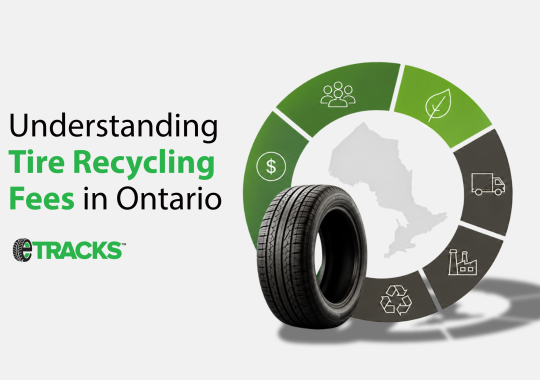
Understanding Tire Recycling Fees in Ontario
Ontario does not have a single, standardized tire recycling fee. The amount consumers see at the point of sale can vary depending on the tire producer, supplier, retailer and the compliance service model used by a Producer Responsibility Organization (PRO). This means a fee charged at the register is not a province-wide recycling rate.
This overview explains how tire recycling fees work in Ontario, where eTracks fits in, and why accurate fee attribution matters for producers, retailers and consumers.
How Tire Recycling Is Managed in Ontario
Ontario tire recycling has been regulated under the Resource Recovery and Circular Economy Act, 2016 (RRCEA) since 2018 and operates under an Individual Producer Responsibility (IPR) model. Under the Tires Regulation, tire producers – including manufacturers, automakers and importers – are responsible for managing the collection and recycling of the tires they supply into the Ontario market. To meet their regulatory obligations, most tire producers work with a Producer Responsibility Organization (PRO), such as eTracks, to support compliance, logistics and reporting. PROs are not government entities; they are private businesses operating in a competitive market. The PRO market is diverse, with five of the six PROs operating as for-profit entities, some vertically integra...
Read more
July 30, 2026
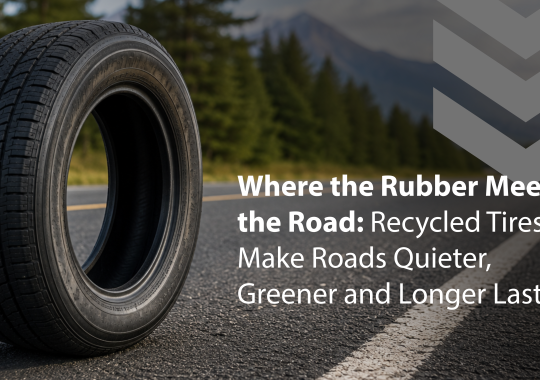
Where the Rubber Meets the Road: Recycled Tires Make Roads Quieter, Greener and Longer Lasting
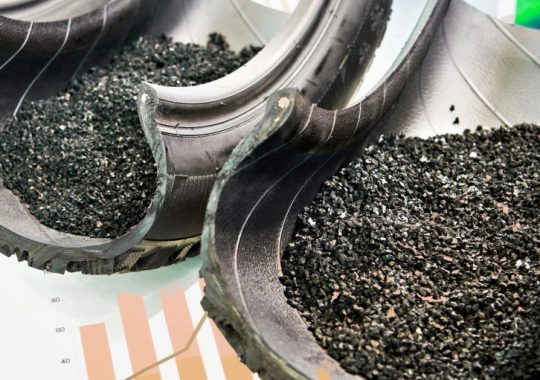
A growing number of used tires are finding a second life on the road. Adding recycled rubber to the asphalt mix for paving roadways comes with a range of perks for drivers and the environment while keeping end-of-life tires out of landfills. As the only not-for profit tire PRO in Ontario, eTracks hopes to see greater adoption of applications like rubberized asphalt, where an increasing volume of end-of-life are utilized in ways that are both economical and environmentally positive.
Rubber-modified asphalt made with tires is shown to reduce traffic noise, improve vehicle fuel economy, and create fewer lifecycle greenhouse gas emissions compared to conventional asphalt. It also provides a viable end market for the billion tires discarded annually around the world, reducing waste and ...
Read more
July 20, 2026
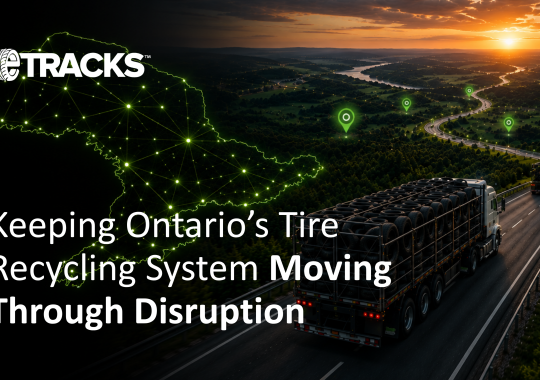
Keeping Ontario’s Tire Recycling System Moving Through Disruption
Proportionate Tire Collection Where it Matters Most
Ontario’s tire recycling system is based on each producer meeting specific requirements to collect and recover a certain tonnage of tires, also known as a Minimum Management Target (MMT) and to ensure they ‘manage and operate’ a compliant collection network across the province. The MMT is calculated based on the producer’s sale to market from the previous 3, 4 and 5 years, and can be met through reuse, retreading or processing (e.g. “crumbing”), each having a different recovery rate*.
*Recovery Rate: In tire recycling, a recovery rate is the percentage of old, discarded tires that are successfully collected and put to a useful new purpose instead of going to a landfill. This includes tires made into new products, re-used or retreaded.
Once tires reach their end-of-life (EOL), it’s neither operationally nor economically feasible to separate and collect millions of tires by brand (individual producer, importer or automaker). Instead, collection occurs from physical sites where tires accumulate, with producer obligations measured by weight rather than brand.
During the current surge in Ontario scrap tire volumes, eTracks looks beyond minimum regulatory targets by collecting in proportion of its producer customers overall ...
Read more
March 03, 2026
Free tire disposal and the role of tire collection sites in Ontario
Find an eTracks Collection Site
Are you a consumer who needs to dispose of your used tires?
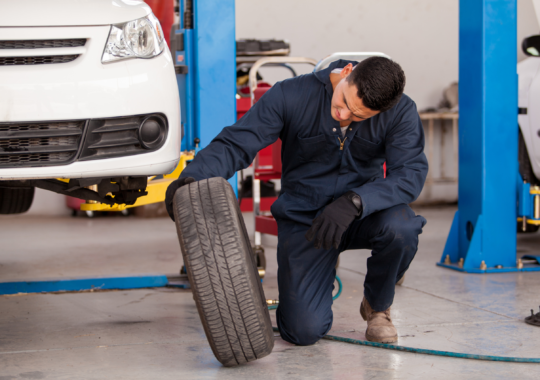
Please visit the eTracks homepage and select the “Find a collection site” tab. This will allow you to search our database and find the closest eTracks enrolled collection site near you. We advise calling the collection site ahead of time to verify their business hours and to let them know you’re bringing your tires over to drop off.
Ontario has amended producer responsibility regulations for tires to increase flexibility, reduce burden and simplify requirements for producers. While these updates do not change the consumer experience, collection and drop-off services remain free; they do change how producers and PROs demonstrate compliance under the updated 2025–2029 framework.
Tire Collection in Ontario
Tire recycling is regulated under the Resource Recovery and Circular Economy Act (RRCEA) in Ontario. The Act, and the Tire Regulation 225/18 within the Act, specify that under the Individual Producer Responsibility (IPR) model c...
Circular economy ,
climate change ,
emissions ,
EPR ,
IPR ,
ontario ,
Producer Responsibility Organization ,
recycling ,
repurpose ,
RRCEA ,
tire change ,
tire collection ,
tire recycling
Read more
October 30, 2025
Highlights from CATRA’s 2025 Annual Members Meeting
Reflecting on Leadership and Collaboration:
Earlier this month, members of the Canadian Association of Tire Recycling Agencies gathered in Calgary, Alberta, for the 2025 Annual Members Meeting. Hosted at the historic Fairmont Palliser, the two-day event brought together representatives from ten provincial agencies, partners, and industry stakeholders for a productive exchange of insights, progress, and ideas shaping the future of end-of-life tire management in Canada.
This year’s meeting also marked a meaningful milestone, eTracks concluded two terms (four years) as the Chair of CATRA, a period defined by collaboration, innovation, and measurable results across the national network. Under eTracks’ leadership, CATRA strengthened its data-driven approach, advanced national performance tracking, and deepened its commitment to circular economy outcomes.
Building on the achievements highlighted in CATRA’s 2024 Annual Report, discussions in Calgary centered on the organization’s ongoing three-year strategic plan. Members shared updates tied to CATRA’s Value Areas, including compliance efforts, enhanced reporting and analytics, and continued development of sustainable end markets for recycled materials. The sessions also included a review of financials, approval of the 2025 budget, and collaborative planning for the year ahead.
Read more
October 25, 2023
Tire Recycling Helps Avoid Harmful Emissions
Tire Recycling Helps Avoid Harmful Emissions
An ongoing study confirms that tire recycling avoids harmful emissions when compared to the impacts of using new materials to create the same products.
Read the most current LCA Report for eTracks tire recycling efforts: Scrap Tire Life Cycle Assessment (updated to include 2021 and 2022 data)
Meeting producer obligations under Ontario’s Resource Recovery and Circular Economy Act (RRCEA) and Tire Regulation 225/18 means providing services to producers that ensure they meet their regulatory target to collect and recycle 100 per cent of the used tires they sell into the marketplace. This includes transporting them to processing facilities and verifying how they are repurposed into new products for approved use in the marketplace as a Tire Derived Product (TDP). A TDP displaces the more conventional use of new, or “raw” materials used to make products.
People expect that products made from recycled tires will deliver ecological benefits when compared to the use of (new) materials they displace. Putting numbers to this expectation was at the heart of the “Scrap Tire Life Cycle ...
Circular economy ,
climate change ,
emissions ,
EPR ,
IPR ,
ontario ,
Producer Responsibility Organization ,
recycling ,
repurpose ,
RRCEA ,
tire recycling
Read more
February 23, 2023
What's changed in tire recycling since 2019?
What’s changed in tire recycling since 2019?
This blog was written to address frequently asked questions from Ontario tire collection sites (a site where used tires are picked up for recycling or disposal, such as tire shops and car dealerships.)
Many things changed in the tire recycling industry when the Individual Producer Responsibility (IPR) model was introduced by the Ontario government on January 1, 2019 as part of the Resource Recovery and Circular Economy Act (RRCEA). When the RRECA came into effect, so did Tire Regulation 225/18; and it changed how Ontario manages tire recycling. The purpose of this article is to shine some light on the changes that came about as a result and make sense of it from the perspective of a tire shop and/or dealership, referred to in the regulation as “collection sites”.
Then and Now
The best place to start is with the difference between the Stewardship model that operated in Ontario until the end of 2018; and the Individual Producer Responsibility (IPR) model which replaced the stewardship model as of January 1, 2019. Broadly speaking, Stewardship can be applied to many material classes and refers to the ethical and responsible management of resources, both natural and human-made, by an organiz...
Read more
September 15, 2022
How Tires are Made
How Tires are Made: Blending chemistry, physics & engineering to make and recycle tires
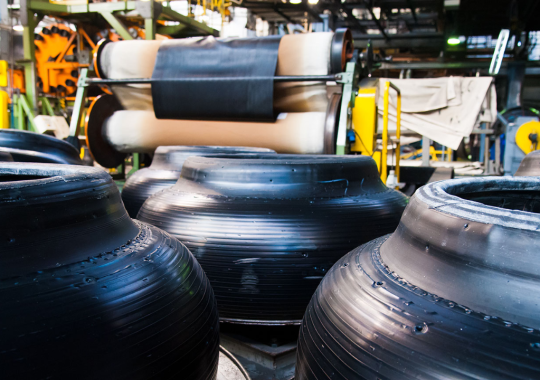
Ever wonder how your car tires were made? The basic steps of tire manufacturing start with intensive planning and design to customize each tire model to meet the stresses and performance requirements to match a particular vehicle. The production process begins with the selection of several types of rubber along with special oils, carbon black, pigments, antioxidants, silica, and other additives that are combined to provide the exact characteristics for each class of tire. The assembly of the tire includes an inner liner, body plies and belts, bronze coated steel wire strands, and finally, tread and sidewalls. After being pressed together, the end result is called a “green” or uncured tire.
In the last step the green tire is placed inside a mold and inflated so it forms to the tread. Then it is heated to more than 300 degrees Fahrenheit for twelve to fifteen minutes, vulcanizing it to bond the components and cure the rubber. Tires are then inspected, and sample tires are randomly tested, x-rayed, cut apart to look for flaws, run on test wheels, or road-tested to evaluate handling, mileage and traction performance.
Read more