Clean Loads: What Doesn’t Belong in a Tire Load
Metal, garbage, and other non-tire materials in a tire load can create problems beyond a single pickup or delivery.
Contamination can require additional offloading, sorting and reloading. It can also damage processing equipment, disrupt delivery schedules and reduce transportation capacity. Equipment downtime may affect pickups and processing elsewhere in the network.
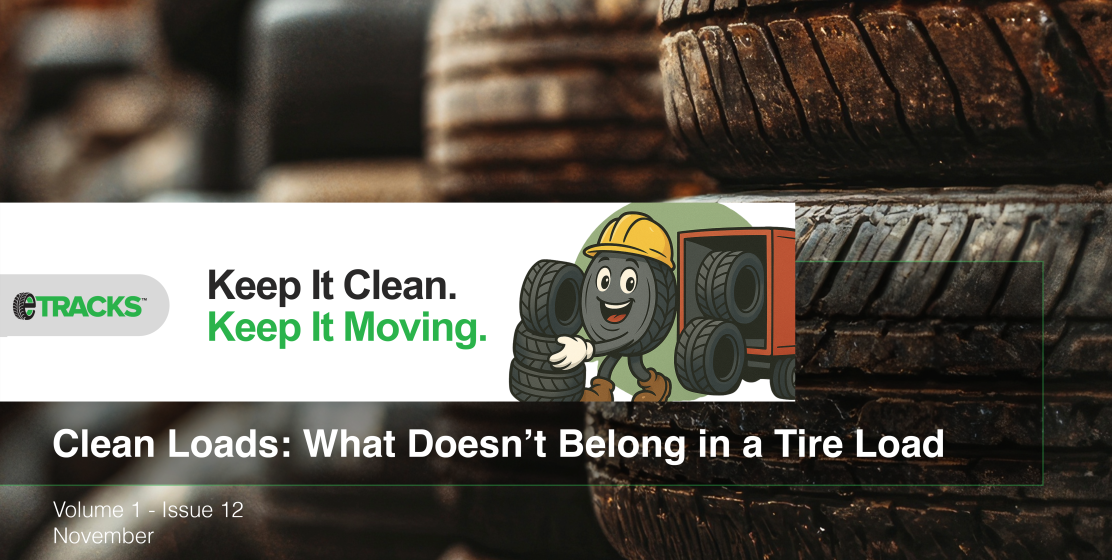
eTracks developed the Clean Loads Campaign to help collection sites and logistics service providers prevent contamination before tires are picked up.
Keep It Clean. Keeping It Moving.
A clean load contains end-of-life tires, including tires still attached to rims, without garbage, loose metal or other non-tire materials.
Common contaminants include:
- Loose metal that is not part of a tire or rim
- Garbage
- Other non-tire materials
These materials can become mixed with tires in storage areas or during loading. Inspecting the area before pickup can identify items that need to be removed.
Even a small amount of contamination can create additional work when a load reaches a processor. Checking the tires in advance can reduce the risk of equipment damage and allow them to be unloaded, sorted and processed with fewer interruptions.
Clean Loads at Every Step
Keeping a load clean does not begin or end at pickup. It requires attention throughout the tire collection and recycling system.
Collection sites can keep garbage, loose metal and other non-tire materials out of tire storage areas. Logistics service providers can watch for visible contamination during loading and before delivery. When clean loads reach processors, the tires can be unloaded and processed with fewer interruptions from debris.
When unwanted materials travel with the tires, they can create complications that extend beyond the immediate delivery. Taking the time to check each load can make a difference across the tire recycling system.
Check Before Pickup
Collection sites can reduce contamination by keeping tire storage areas separate from garbage, scrap metal and other materials.
Before the logistics service provider arrives:
- Inspect the storage area. Look for garbage, loose metal and other non-tire materials.
- Remove visible contaminants. Clear the area before loading begins.
- Check between and underneath the tires. Materials may not be visible from the top of the pile.
- Keep the area organized. A clear storage space makes contamination easier to identify.
- Inform staff. Employees who receive, store or prepare tires for pickup should know what can and cannot be included.
Adding these steps to regular pickup preparation can reduce avoidable delays and disruptions.
Before the Next Pickup
Take a moment to check the tires and remove anything that does not belong. A clean load can mean fewer preventable issues at the next stage and contribute to a more reliable tire collection and recycling system.